
Our Approach
The philosophy and strategy that guide everything we do.
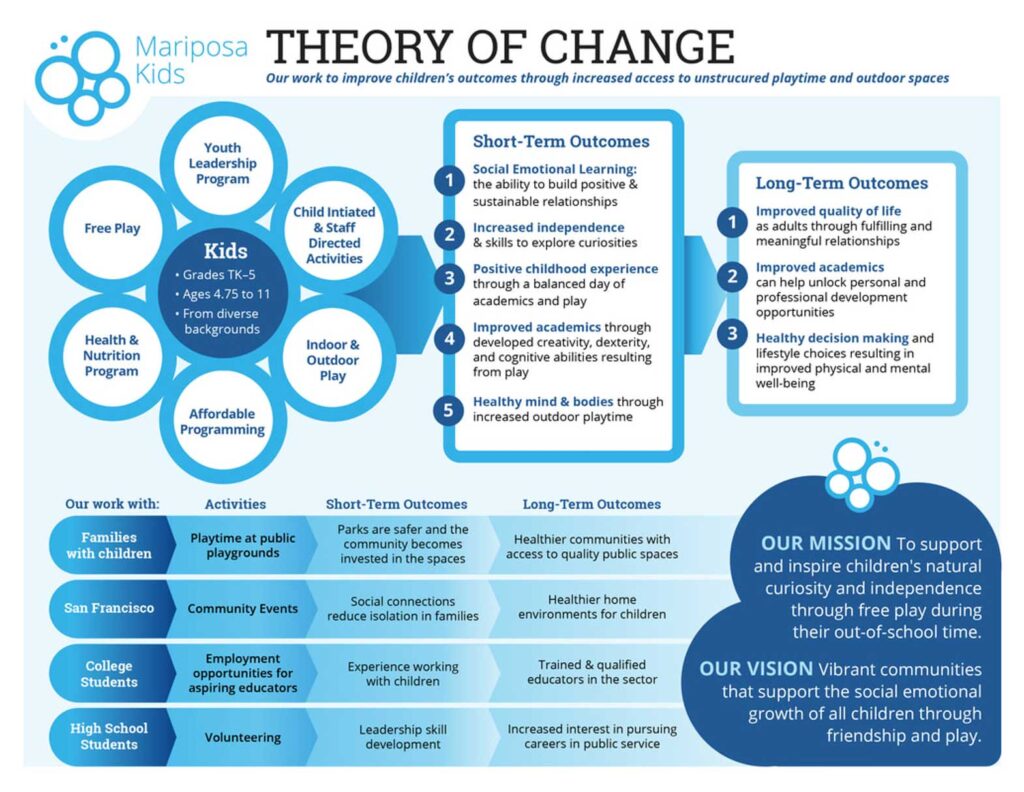
SAFE SPACE, FREE PLAY, COMMUNITY
Our programs are built on three core principles:
Safe Space
Every child deserves a place where they feel secure, respected, and free to be themselves.
Free Play
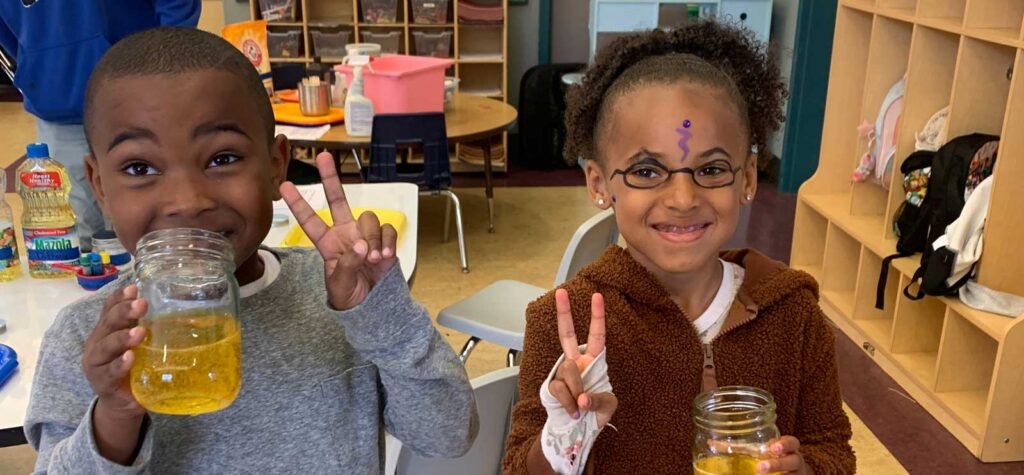
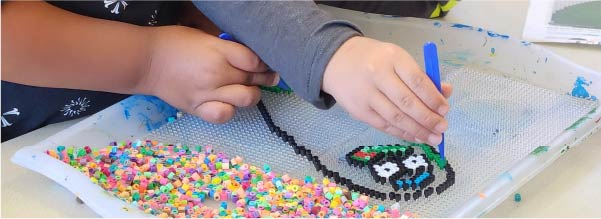
Children need the freedom to play and the freedom of choice to develop important life skills.
Community
We grow stronger together. Our programs bring children and families into connection with each other and with the neighborhoods we serve.
THE POWER OF FREE PLAY
Over the past 50 years, opportunities for children to play freely have declined dramatically in the United States. Between 1981 and 1997, time spent playing by children age six to eight declined by 25 percent. (1) Today, children spend on average just 3.4 hours per week in free play.
This matters because free play (without screens!) is essential to healthy development. Screen-free play enhances brain structure and function and promotes executive function—the process of learning—which allows us to pursue goals and ignore distractions. The American Academy of Pediatrics has stated that play is not frivolous and that when play is missing in a child’s life, it can disrupt healthy development. (2)
At Mariposa Kids, we’re working to restore what children have lost: the time and space to just play.
SOCIAL-EMOTIONAL LEARNING
Play isn’t just fun—it’s how children develop the skills they need to thrive. Through our screen-free programming, kids build confidence, learn to navigate friendships, manage emotions, and develop independence.
Research confirms that social-emotional learning has a direct impact on academic success. SEL interventions increased students’ academic performance by 11 percentile points compared to students who did not participate. (3)The positive impact lasts long-term: years after students participated in SEL, their academic performance was an average of 13 percentile points higher. (4)
OUTDOOR TIME
At Mariposa Kids, approximately 50% of each program day is spent outdoors. This is intentional. Research shows that time spent in nature during childhood brings cognitive, psychological, academic, and health benefits. (5)
Studies have documented positive outcomes including reducing stress, increasing attention, and supporting resilience, physical health, and academic outcomes. A follow-up study found that even 10 years later, children who had spent more time outside in early childhood had better attentional control and academic results as teenagers. (6)
HEALTH & NUTRITION PROGRAM
To nurture the well-being of children and families enrolled in Mariposa Kids, we strive to provide nutritious snack options (two snacks a day) and lessons about food, meal preparation, and nutrition through weekly activities. Our Health & Nutrition Program provides a center of focus that is meant to prioritize good food health in children, while keeping in mind our core pillars of safety, play, and community.
Citations:
(4) CASEL (Collaborative for Academic, Social, and Emotional Learning). What does the research say?
(6) Ulset, V. S., Vitaro, F., Brendgen, M., Bekkhus, M., & Borge, A. I. (2017). Time spent outdoors during preschool: Links with children’s cognitive and behavioral development. Journal of Environmental Psychology, 52, 69-80.
Get Involved
There are many ways to be part of the Mariposa Kids community.
FINANCIAL ASSISTANCE
We believe in inclusive, diverse environments. Financial assistance is available to families earning low-income.